The World Still Hasn't Caught Up
She became a world champion at the exact moment the sport's future began to shift. Most people still do not know her name. They will.
Tombstone, Arizona does not produce things halfway. The high-desert Southwest is hard on everything that grows there — the sun punishes, the ground gives nothing, the plants have thorns and the snakes are real. You learn early that the land does not care about your comfort. The town took its character from that country and kept it: Earp, Holliday, the O.K. Corral, the town too tough to die. It is an appropriate place to begin.
She came up in that country — small boxing gyms, rough-edged grappling rooms, Muay Thai coaches, long drives, the kind of environment that builds athletes before anyone thinks to call them a prospect. She started at four. Not because anyone drew a blueprint — because she would not stop asking. The appetite came first. Before she was eight she was training six days a week and running to build cardio. By the time most kids are still drifting between activities, she was already living inside repetition: train, recover, run, come back, again.
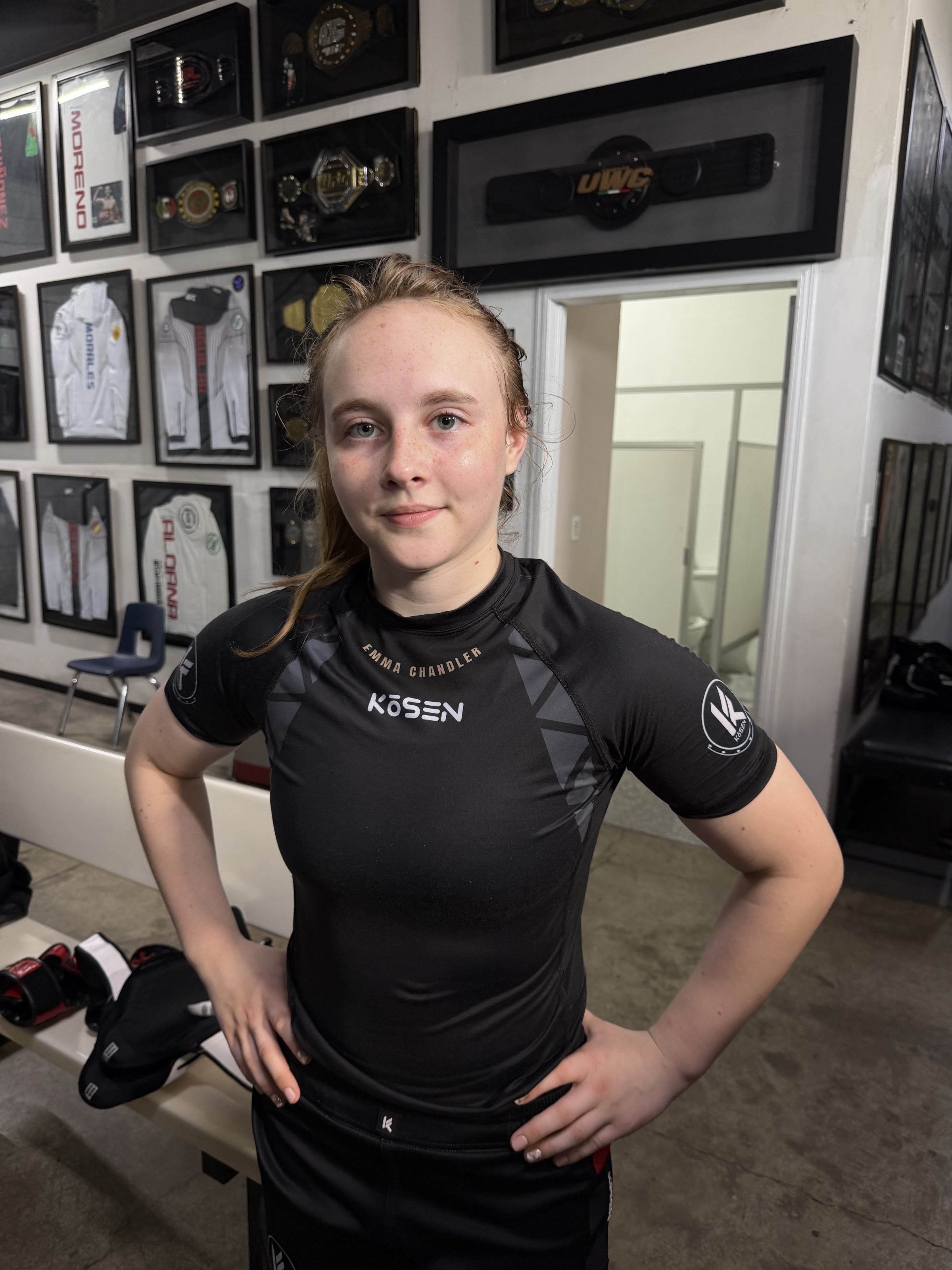
Her name is Emma Chandler.
Number one in the world, and almost no one noticed
On her fourteenth birthday, at an inaugural IBJJF Pan Kids No-Gi Championship, she won every match by submission. Every one — in a ruleset that routinely rewards point management over finishing, against athletes from some of the most polished youth pipelines in the country. She had already won on points in the final; the instruction was to settle and take the decision. She kept hunting, accepted the penalty risk that comes with forcing action late, and got the finish anyway. She closed the 2023–2024 IBJJF no-gi season ranked number one in the world in her division. She is a devastating tactical threat whose meticulous hunting style produces a massive cross-divisional stoppage rate.
And almost nothing happened. No feature, no wave of attention trying to make sense of it. Youth combat sports hides extraordinary things in plain sight — the results live in brackets and databases, the people nearest the sport notice, and the larger world usually does not. So she kept going.
The numbers need context
She entered 2025 with a documented record exceeding six hundred competitive results across mixed martial arts, pankration, Brazilian jiu-jitsu, submission grappling, wrestling, and Muay Thai — hundreds of them on the wrestling mat, more than thirty in a Muay Thai ring — with a very high finish rate and sustained pressure-finisher profile. Raw numbers in youth combat sports can mislead as easily as they inform: records get padded, athletes get protected, brackets run shallow. Hers gets more interesting the closer you look.
One example. In 2024 she beat a submission grappler at a regional event in Texas — at the time, one strong win in a crowded record. Weeks later that same athlete reached the final of the ADCC World Championships and took silver, at one of the most prestigious submission events on earth. The woman she'd beaten in Texas was an ADCC World silver medalist. Nobody connected the dots. That is the texture of the record: the wins look bigger later than they did at first. It does not read like padding. It reads like evidence built faster than attention could catch up.
The result sat there — plain, documented — waiting for people to understand what it meant. Very few did. That silence is part of the story too.
2025 became a campaign
Youth MMA in the United States runs across a tangle of national federations that feed the two international bodies — IMMAF and United World Wrestling. In 2025 she ran the table on them. She cleared her divisions in the IMMAF feeder, and took an additional bout with a two-time IMMAF Youth World Champion. Then she did what a résumé-builder never would: she passed on the IMMAF World Championships in Abu Dhabi and drove from Texas to Wisconsin instead — into Roufusport, the Milwaukee academy of the late Duke Roufus that has produced multiple UFC champions — to take that year's GAMMA national champion a full age division above her, on their own mat. The same day, in the same room, she beat a fighter who would go on to win a 2026 GAMMA national title. A flight across the world skipped for a two-day drive to hunt one specific champion: that is the grain of the whole record. By the end of the domestic season she had cleared her division and the one above it, across the federations feeding both world tracks.
Not in theory — in sequence, against the athletes those systems most wanted to validate. By mid-year the domestic proof was already there.
Loutraki
She did not fight through a crowded bracket to reach the UWW World Championships. She was selected directly — a judgment, not a courtesy — by the head of the sole U.S. governing body for pankration under United World Wrestling, who had watched her compete in person and seen what he needed to see.
November 2025, Loutraki, Greece. World championships are attritional: single elimination, weight, waiting, noise, then the next day and the next. She arrived largely unknown to the national-team organization — a record in a database, a level most of the people around her had never actually witnessed. The coach assigned to read the field watched her warm-ups, saw an athlete keeping everything measured, and committed his resources to a different American with more established credentials. The rational call, on everything visible.
Her corner was her younger brother, then twelve — built inside the same system from the beginning, who knew every angle, every failsafe, every code word of what she was about to do. United World Wrestling and the IOC had credentialed him to stand there, one of the youngest ever to hold that credential at that level. They ran their program. Business as usual.
Between rounds, opponents went to their corners and sat. She never sat down. Not once. While they recovered, she was already at center mat, waiting. It begins as a physical gap. Then it becomes psychological. Then it becomes both at once.
Semifinal, against a decorated athlete with more than three hundred wins and a multi-year title run: thirty to twenty-seven, every judge, every round. Gold-medal final: thirty to twenty-seven, every judge, every round. The U.S. women's podium finish required gold from the last American woman still competing. She was that athlete. She won the final, won the title, and the U.S. women finished third in the world — while her twelve-year-old brother worked the corner a national-team coach had chosen not to occupy.
The missing piece
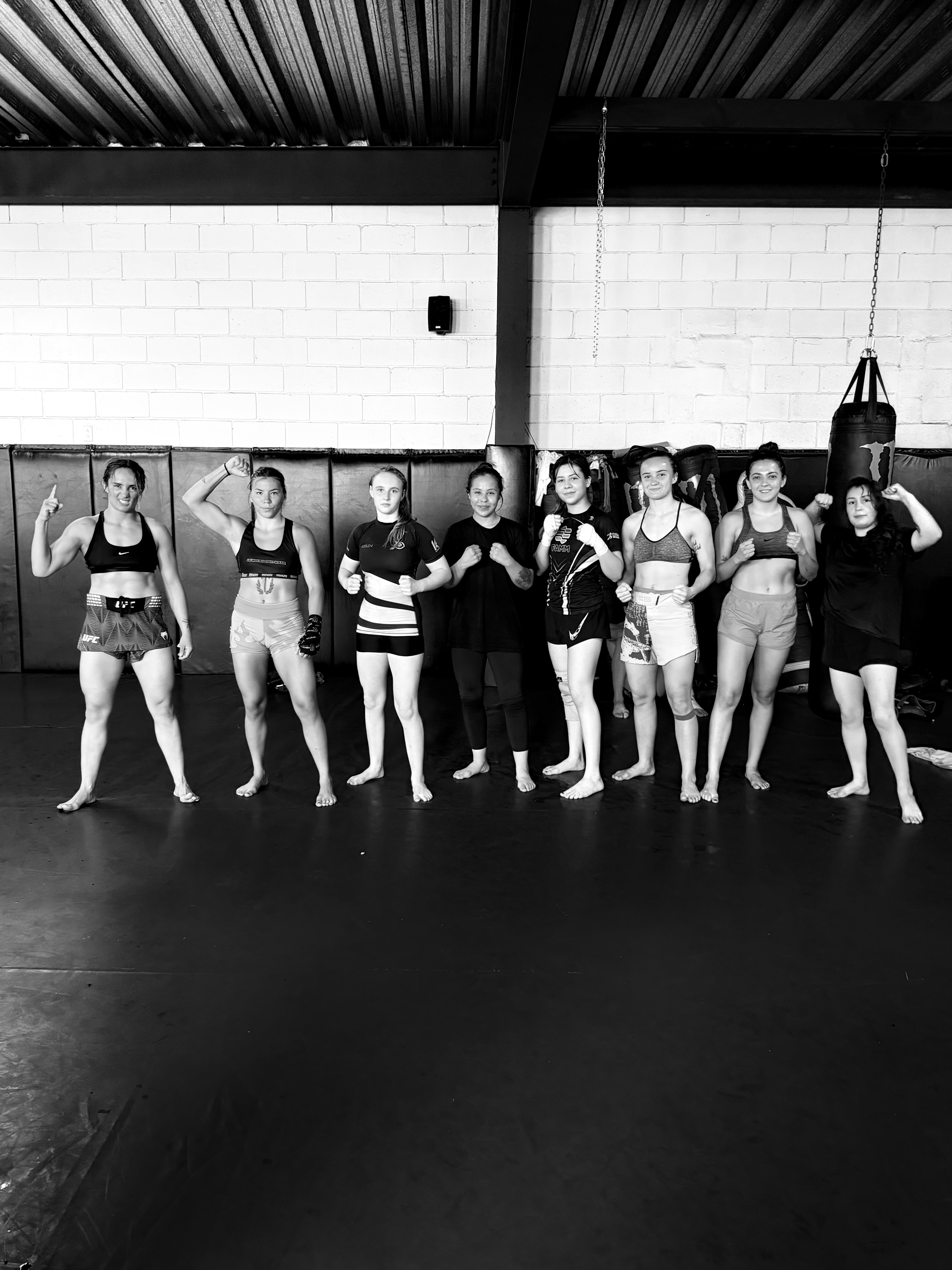
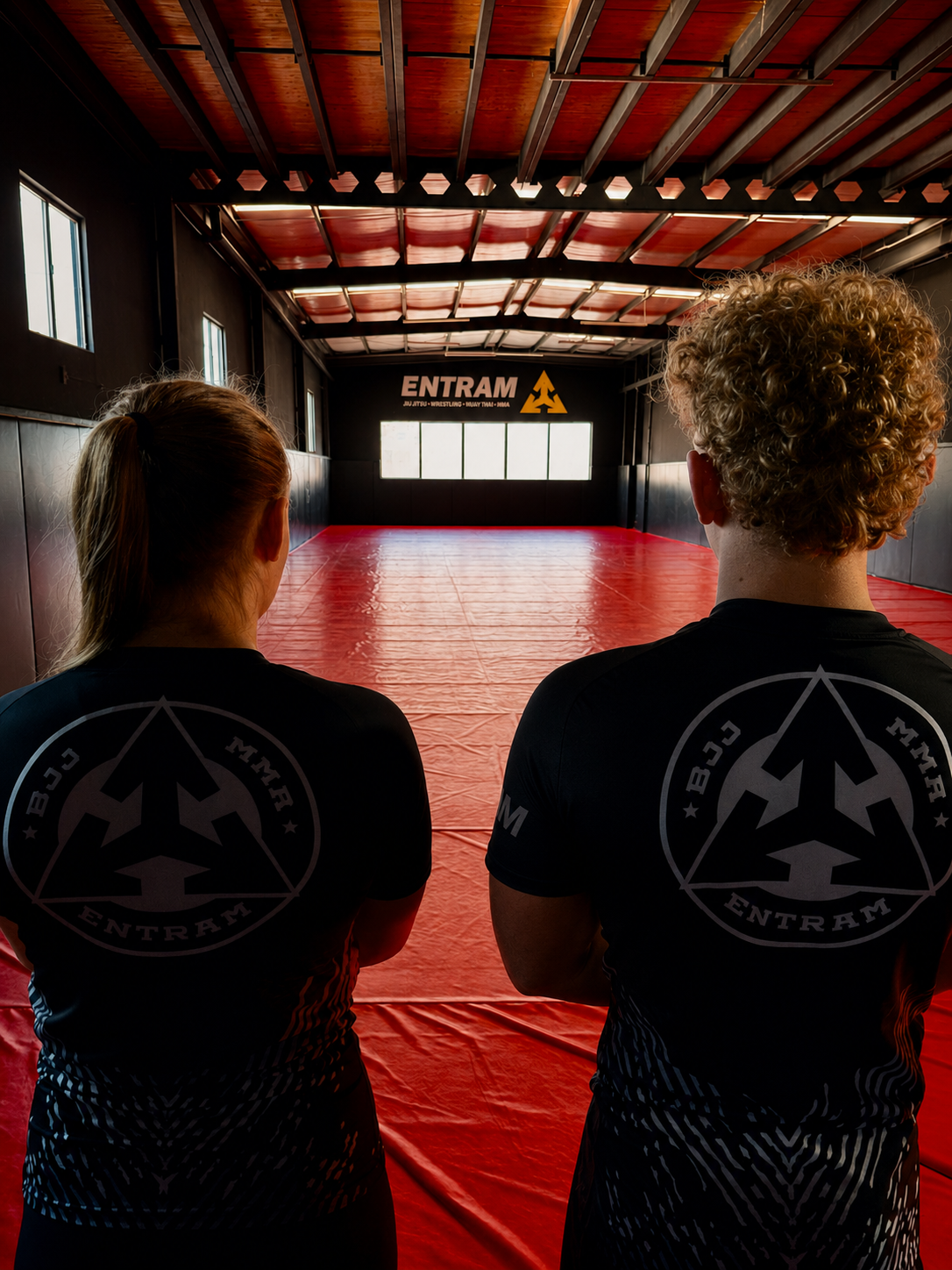
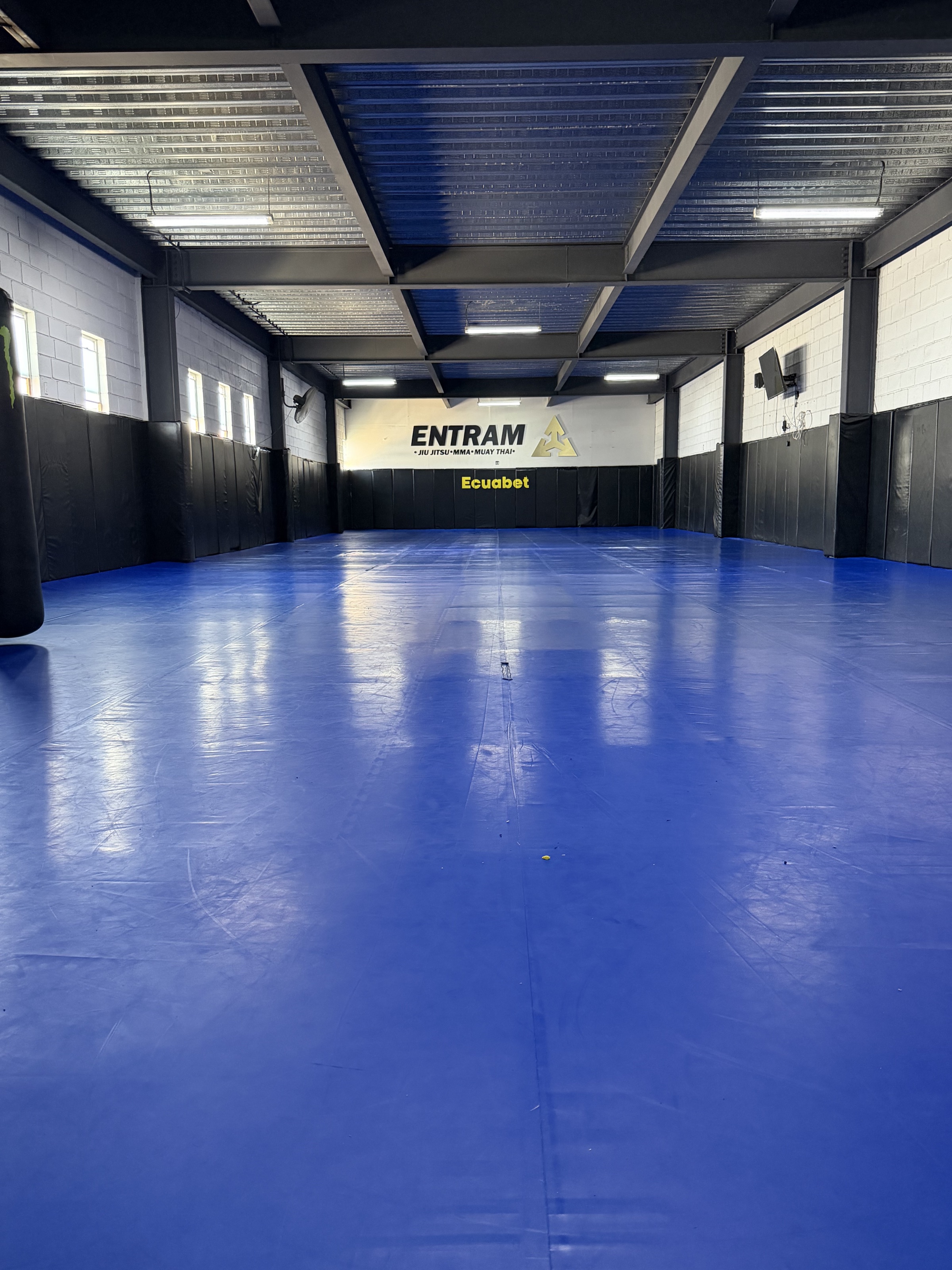
By 2026 she had outrun the domestic map entirely: the fighters collecting national titles that year were ones she had already beaten, and she was not among them to defend a bracket — she was in Tijuana, in camp at Entram, preparing for full MMA. For years the engine ran on assembled expertise — elite trainers drawn across gyms, disciplines, and regions and integrated back to a private plan. It built the record. What it could not give her was one room and one coach who had done this before with the best in the world. That is the piece that just fell into place. She now lives and trains full time in Tijuana under Raúl Arvizu at Entram Gym — a powerhouse that has produced world champions, including a UFC flyweight champion coached there from age twelve. The whole ecosystem moved for it. On July 26, 2026, she took her first sanctioned, full-rules MMA bout at LAP Fight League 06, in the open air beside the city's Palacio Municipal, on the main stage of Tijuana's 137th-anniversary celebration, free to the public and in front of thousands — because in Mexico the fights are real, recognized, and available years before the system she came from would allow it.

Tijuana, July 26
The card was called LAP 06 — Rodríguez vs. Flores. It ran on a Sunday evening at Plaza Palacios, the open ground beside the Palacio Municipal in Zona Río, free to anyone who walked up, as the fighting portion of the city's 137th-anniversary celebration. Twelve bouts. One referee worked all of them.
She was booked tenth. Above her were the flyweight title fight and the main event; everything else on the card was below. A debutant placed third from the top is not a courtesy slot — it is a promoter telling the room where to look.
It did not reach the second round. She took Jasmine Lara down, moved to mount, and finished it with punches at 2:00 of the first — TKO, stopped by referee Asael Guzmán. On a card where seven of the twelve bouts ended in submissions, hers was one of three stoppages by strikes.
Then the part that has never happened before in this record: the databases were fast.
What the search doesn't show
There is a standard shape to the modern regional prospect. A travel fund. Sponsor tags and a discount code in the bio. Training clips several times a week, a follower count treated as a milestone, a highlight reel that arrives long before the résumé does. It is a digital footprint that outruns the record.
She is the inversion. The record outruns the footprint by orders of magnitude.
The modern regional prospect is easy to find and hard to verify — a feed full of highlights, a record you have to take on faith. She is the opposite: almost impossible to find, and completely verifiable. The brackets are public record. The federation registries are public record. The news coverage is public record. The Instagram is five posts.
Her documented competitive results outnumber her Instagram posts more than a hundred to one. There is no crowdfunding page. There are no sponsor codes, because there are no sponsors. There is no lifestyle feed. What there is instead: a world title, a national team selection, a sanctioned debut logged in two independent databases, a main-stage slot on a municipal anniversary card, and coverage in ZETA Tijuana. The presence is institutional and physical. The absence is only digital.
Search her name and you may find little — or worse, fragments assembled by scrapers years ago and never corrected, still circulating childhood data as if it were current. The absence is not a gap in the record. It is a gap in where you're looking. The record lives where records are kept: federation brackets, the IBJJF registry, sanctioned results, and now the news.
None of this is an accident or an oversight, and it is not shyness. It is the same instruction that governs everything else in the record: do the work, let the result be the argument. Her bio is one line long and it has not changed in years — quiet steps, dangerous intent. Read against a six-hundred-result ledger, it stops being a slogan and starts being an accurate description of method. The thin footprint is not the anomaly in this profile. It is the trait.
The package nobody built
Set the fighting aside and read it the way a matchmaker would.
She was born in Tombstone, Arizona — gunfighter country, the town too tough to die, the most mythologized square mile in the American West — and she now fights out of Tijuana. Two flags, two languages, one record. She answers questions in English and Spanish, a fighter who needs no translator on either side of the border.
That last detail is not a biographical footnote. The fighter who can genuinely carry audiences in both the United States and Mexico is the rarest asset in the sport and the most expensive to manufacture, because it cannot be manufactured — it has to be someone's actual life. Promotions spend years and considerable money looking for a two-market draw and usually settle for a fighter who is popular on one side and subtitled on the other.
The room she trains in knows the profile. Entram has built world champions out of Tijuana before, which means the people running it have seen what this looks like early more than once.
Promoters spend fortunes manufacturing exactly this package. It walked into Entram unmanufactured. The most marketable thing about her may be that she has never once tried to be marketable.
The documented record — to ledger
References
The world still hasn't caught up
Strip everything away and it is simple. A girl from hard country found fighting early and never let it go. She built an engine before most people knew her name, kept winning across styles and organizations and levels of visibility, and at fifteen attached her name forever to the first gold ever won at the inaugural UWW Youth Pankration World Championships — in a sport that may yet move toward the Olympic program. Her Instagram barely reads like the profile of one of the most dominant young combat athletes in America: a handful of posts, a couple hundred followers, one line that serves as its own summary — quiet steps, dangerous intent.
She is not announcing the pursuit. She is moving toward it the way serious athletes always have: quietly, patiently, with a record doing the talking. The hardware hangs on the wall. The results live in the brackets. As of July 26 they also live in the databases the sport actually reads, which is the first time the record and the reference infrastructure have agreed in public. A girl from Tombstone. Fifteen years old. World champion, and now 1-0-0. Almost nobody knows her name.
They will.
Related analysis: The Athlete the Databases Lost — how discipline-siloed records miscategorize a multi-discipline athlete.